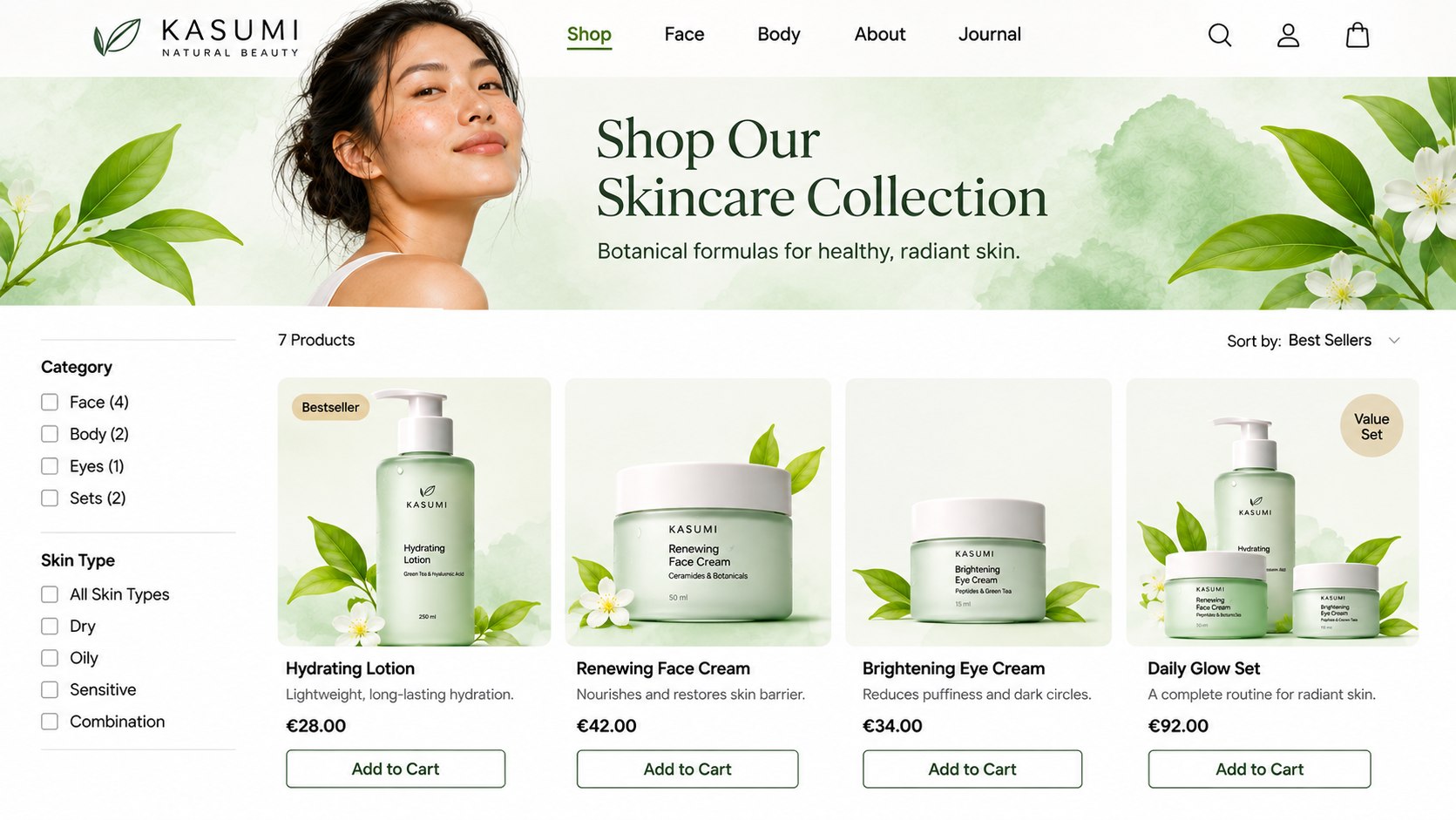
Ecommerce Google Ads for beauty industry brands put your products in front of shoppers who are already searching for them. Beauty is one of the most competitive ecommerce categories, so campaigns need clean product feeds, accurate tracking and a strategy built around repeat purchases. An ecommerce Google Ads agency like Evensen Marketing manages Shopping, Performance Max and Search campaigns across multiple markets, saving you time and turning ad spend into profitable growth.
Why Ecommerce Google Ads for Beauty Industry Brands Matter
Beauty shoppers search with intent. They type in ingredients, shades, skin concerns and product types: "vitamin C serum for dark spots", "vegan lipstick nude shade", "best moisturizer for oily skin". Every one of those searches is a buying signal, and ecommerce Google Ads for beauty industry brands let you appear at exactly that moment.
Social media is great for discovery, but Google is where shoppers go when they are ready to compare and buy. That is why ecommerce Google Ads for beauty products often deliver a more predictable return than awareness-led channels. You are not interrupting someone's scroll; you are answering a question they just asked.
The importance of investing in Google Ads for beauty products
- Purchase intent: shoppers searching for a specific product are closer to buying than people browsing a feed.
- Visual Shopping ads: product images, prices and reviews appear directly in search results, which suits a category where looks sell.
- Repeat purchases: skincare and cosmetics are replenished regularly, so one well-acquired customer can buy many times.
- Measurable results: you can track revenue, return on ad spend and cost per acquisition for every campaign and product.
- Multi-market reach: you can launch in new countries and languages without opening physical stores.
Competition is the challenge. Large beauty groups invest heavily in search, and indie brands often find it hard to win visibility on their own. A well-structured ecommerce Google Ads strategy helps smaller beauty brands compete on relevance rather than budget alone.
Real Questions Beauty Brands Ask About Ecommerce Google Ads
We looked at the questions beauty founders and ecommerce managers ask on Reddit, YouTube and marketing forums. Here are clear answers to the most common questions about ecommerce Google Ads for the beauty industry.
Is Google Ads worth it for a small beauty brand?
Yes, as long as your margins can support paid traffic. Ecommerce Google Ads for beauty industry brands work best when you know your product margins and how often customers come back to buy again. Small brands often see better results by focusing budget on Google Shopping for their best sellers rather than spreading it thinly across many platforms.
Should beauty brands use Google Ads or Meta Ads?
Both, but for different jobs. Meta and TikTok help people discover a brand they have never heard of. Google captures people who are already looking. For most beauty ecommerce stores, Google Ads converts demand that social media creates, so the two channels work best together. In practice, ecommerce Google Ads for the beauty industry perform best when social campaigns are already building awareness.
How much should a beauty brand spend on Google Ads?
There is no single number. Budget depends on your margins, average order value, competition in your niche and the markets you target. A sensible approach is to start with a test budget on your best-selling products, measure return on ad spend, and scale what works. An experienced ecommerce Google Ads agency can help you set realistic targets before you spend.
Why are my Shopping ads getting clicks but no sales?
This is one of the most common complaints in ecommerce forums. The usual causes are a weak product feed, incorrect conversion tracking, uncompetitive pricing, slow product pages or poor reviews. Beauty shoppers also need detail: ingredients, shade options and skin type. If your product pages do not answer those questions, clicks will not turn into sales.
Which campaign types work best for beauty products?
Most ecommerce Google Ads for beauty products combine three campaign types. Shopping campaigns show your products with images and prices. Performance Max uses Google's automation across Search, Shopping, YouTube and Display. Search campaigns capture brand and high-intent keywords. The right mix depends on your catalog size, data and goals.
Are there advertising restrictions for beauty products?
Yes. Google has policies around health claims, before-and-after imagery and certain ingredients. Products making medical or treatment claims may face limits or disapprovals. Knowing these rules in advance saves time and keeps your account in good standing.
Should I hire an agency or manage Google Ads myself?
Managing campaigns yourself can work while you are testing with a small budget. As spend grows, the work becomes more complex: feed optimization, bidding strategy, tracking, testing and reporting. Many founders on Reddit describe hitting a wall where ads take up too much of their time. That is usually the point where an ecommerce Google Ads agency becomes worth the investment. Our in-house vs agency comparison of Google Ads management for ecommerce covers this decision in more detail.
Is an agency fee justified?
It is justified when the agency delivers more profit than it costs, and when it frees up your time to focus on product, brand and operations. Ask any agency how they measure success, how they report results and how they handle your product feed. Clear answers are a good sign. For typical pricing, see our breakdown of ecommerce Google Ads agency cost.
How long does it take to see results from Google Ads?
Campaigns usually need a learning period before performance settles, especially with automated bidding and Performance Max. Expect the first weeks to focus on gathering data, then steady optimization. Ecommerce Google Ads for the beauty industry reward patience: brands that change everything after a few days rarely give campaigns time to learn.
What do I need before launching ecommerce Google Ads for beauty products?
You need a Google Ads account, a Google Merchant Center account with an approved product feed, working conversion tracking and product pages that load quickly on mobile. Most ecommerce platforms, including Shopify and WooCommerce, can connect to Merchant Center with an app or plugin.
Should I advertise beauty samples, minis or travel sizes on Google Ads?
It can work well as an entry point. Lower-priced minis and discovery sets make it easier for new customers to try your brand without committing to a full-size product. Campaigns for these products may show a lower first-order return, so judge them on how many customers go on to buy full sizes. Used this way, ecommerce Google Ads for beauty products help turn first-time buyers into repeat customers.
How can a small beauty brand compete with big retailers on Google Shopping?
Avoid broad, expensive terms like "moisturizer" where large retailers dominate. Focus on specific searches built around your ingredients, skin concerns and product benefits, plus your own brand name. Specialized ecommerce beauty Google Ads campaigns let indie brands win on relevance instead of budget.
Do product reviews affect beauty Shopping ads?
Yes. Star ratings can appear on Shopping ads when you have enough reviews and share them with Google. In beauty, where shoppers rely heavily on other people's experiences, ratings can make your ads stand out and build trust before the click. An ecommerce Google Ads agency can help you connect your review platform to Google and make sure ratings show correctly.
Can I target shoppers by skin type or skin concern?
Not directly, but you can target the searches they make. Include terms like "for oily skin", "for sensitive skin" or "for acne-prone skin" in product titles, descriptions and Search campaigns. This makes ecommerce Google Ads for beauty industry brands much more precise.
Should I mention vegan, cruelty-free or clean beauty in my Google Ads?
Yes, if your claims are accurate and verifiable. Many shoppers search for these terms specifically, so add them to product titles, descriptions and ad copy. Avoid vague or unsupported claims, and keep certifications up to date, since misleading claims can lead to ad disapprovals. Clear, honest claims help ecommerce Google Ads for the beauty industry build trust with shoppers who care about values.
Common Mistakes With Ecommerce Google Ads for Beauty Industry Brands
Many beauty brands that say "Google Ads doesn't work for us" are actually running into the same avoidable problems:
- Sending all traffic to the homepage instead of the most relevant product or collection page.
- Using supplier product titles that do not match how shoppers search.
- Running one campaign for the whole catalog, so best sellers and slow movers compete for the same budget.
- Judging results on clicks instead of revenue and profit.
- Ignoring brand searches and letting competitors bid on your brand name.
- Changing bids and budgets too often, which resets the learning process.
Fixing these basics often improves ecommerce Google Ads for beauty industry stores before any extra budget is added.
Seasonal Opportunities for Beauty Brands on Google
Beauty demand follows the calendar. Black Friday, Cyber Monday, the Christmas gifting season, Valentine's Day, Mother's Day and summer skincare all bring spikes in search volume. Ecommerce Google Ads for the beauty industry let you prepare for these moments by planning budgets, promotions and gift sets in advance, then scaling spend when demand peaks. Brands that plan ahead usually capture more of that seasonal demand than brands that react at the last minute.
How to Measure Success in Ecommerce Beauty Google Ads
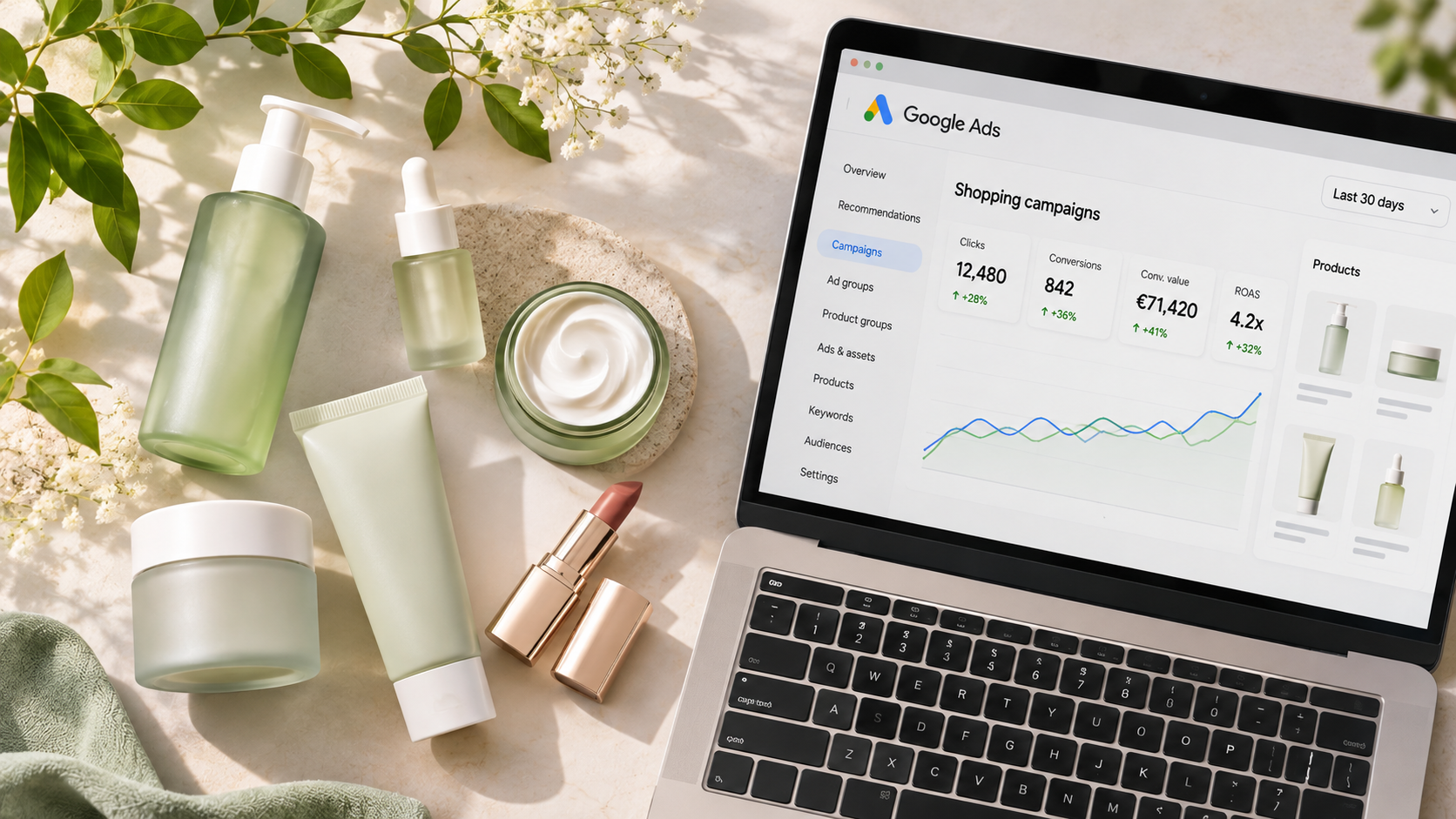
Clicks and impressions are only the start. To judge whether ecommerce beauty Google Ads are working, focus on metrics that connect to profit:
- Return on ad spend (ROAS): revenue generated for every unit of currency spent.
- Cost per acquisition: what it costs to win a new customer.
- Customer lifetime value: how much a customer spends over time, which matters for replenishable beauty products.
- Contribution margin: profit left after product costs, shipping and ad spend.
Looking at lifetime value is especially important in ecommerce Google Ads for beauty industry brands, because a customer who reorders a serum or cleanser several times is worth far more than their first order suggests.
Why Beauty Brands Need an Ecommerce Google Ads Agency
Running ecommerce Google Ads for beauty industry brands is not the same as running ads for a furniture store or an electronics retailer. Beauty has its own rules: hundreds of product variants, shade and size options, ingredient-led searches, seasonal gift periods and customers who reorder every few weeks.
A specialist ecommerce Google Ads agency understands these details and knows how ecommerce Google Ads for the beauty industry differ from campaigns in other sectors. Instead of copying a generic campaign structure, an agency builds campaigns around how beauty shoppers actually search and buy.
The benefits of having an ecommerce Google Ads agency
- Time back: you focus on product development, brand and customers while experts handle the campaigns.
- Product feed expertise: optimized titles, descriptions and attributes help your products appear for the right searches.
- Accurate tracking: correct conversion setup means decisions are based on real revenue, not guesswork.
- Continuous testing: structured tests on bidding, audiences and creative improve results over time.
- Policy knowledge: fewer disapprovals and account issues in a regulated category.
- Clear reporting: you see what each campaign and product contributes to revenue.
- Scalability: when results are strong, an agency can grow budgets and markets without losing control.
For a checklist of what to look for, see our guide on how to choose a Google Ads agency for ecommerce.
Why Choose Evensen Marketing to Manage Your Campaigns
Evensen Marketing is a Google Ads management agency for ecommerce brands operating across multiple markets. We focus on ecommerce, which means our work is built around product feeds, Shopping campaigns, Performance Max and the metrics that matter to online stores: revenue, return on ad spend and profit.
What Evensen Marketing brings to beauty brands
- Ecommerce focus: we specialize in Google Ads for online stores, not general lead generation.
- Multi-market experience: we run campaigns across countries and languages, ideal for beauty brands expanding internationally.
- Full-funnel campaign management: Shopping, Performance Max and Search working together.
- Feed and tracking setup: strong foundations before scaling spend.
- Transparent communication: regular reporting and clear explanations of what is working and why.
- Profit-first mindset: we optimize for sustainable growth, not just clicks.
For beauty brands, this means ecommerce beauty Google Ads campaigns designed around your catalog, your margins and your customers, managed by a team that understands how online stores grow. Our goal is simple: make ecommerce Google Ads for beauty industry clients a predictable, profitable growth channel.
Comparison: In-House vs Freelancer vs Ecommerce Google Ads Agency
Not sure which option fits your brand? Here is how the most common approaches to ecommerce Google Ads for the beauty industry compare.
| Factor | In-house (DIY) | Freelancer | Evensen Marketing (agency) |
|---|---|---|---|
| Time required from you | High | Medium | Low |
| Ecommerce focus | Depends on your skills | Varies | Core specialty |
| Product feed optimization | Manual, often skipped | Basic | Ongoing |
| Conversion tracking | Often incomplete | Varies | Set up and audited |
| Multi-market campaigns | Difficult | Sometimes | Built in |
| Continuous testing | Limited | Limited | Structured |
| Reporting | Self-managed | Basic | Regular and transparent |
| Scalability | Limited by your time | Limited by one person | Scales with your brand |
How to Get Started With Ecommerce Google Ads for Beauty Industry Growth
Whether you work with an agency or start on your own, these steps set up ecommerce Google Ads for beauty industry success:
- Audit your product feed: make sure titles include product type, key ingredients, shade and size.
- Check conversion tracking: confirm purchases and revenue are recorded correctly.
- Know your margins: define the return on ad spend you need to stay profitable.
- Start with best sellers: focus budget on products with proven demand.
- Improve product pages: add ingredients, how-to-use details, reviews and clear images.
- Review and scale: measure results regularly and grow what works.
Final Thoughts
Beauty is a crowded, fast-moving category, but shoppers still turn to Google when they are ready to buy. Investing in ecommerce Google Ads for beauty industry brands gives you a direct line to that demand. With the right structure, tracking and ongoing management, Google Ads becomes a reliable growth channel rather than a cost you hope pays off.
If your beauty brand is ready to grow online across one market or many, Evensen Marketing can manage your ecommerce Google Ads for beauty industry growth so you can focus on building products your customers love. Get in touch to talk about your goals.
Ready to Grow Your Beauty Brand With Google Ads?
At Evensen Marketing, we manage Shopping, Performance Max and Search campaigns for beauty and skincare ecommerce brands across multiple markets, with feeds, tracking and reporting handled by specialists.
Get in touch via our contact form for a free audit of your campaign structure, tracking and product feed.